Trading digital assets and building the systems around them

Institutional trader → technical builder → digital-asset trader

Thirteen years in institutional rates trading, execution, and portfolio management. Now trading digital assets and building software systems, market tools, and AI-assisted workflows for crypto, DeFi, and market structure.

Current focus
  • Funding & basis
  • Liquidity & market making
  • CEX/DEX execution
  • MEV & onchain market structure
  • Trading systems
  • Agent-assisted trading workflows
Interested in
  • Digital-asset trading
  • Trading systems
  • Execution / market structure
  • DeFi trading
  • Liquidity and market making
  • Agent-assisted workflows

Hosted protocol labs, interactive AI surfaces, and market walkthroughs. In-progress work sits in its own section so status stays clear.

Protocol Labs

Hosted apps with their own backends. You can run the swap, the dispute, or the inclusion path instead of only reading about it.

DeFiSolidityGoSimulationHosted

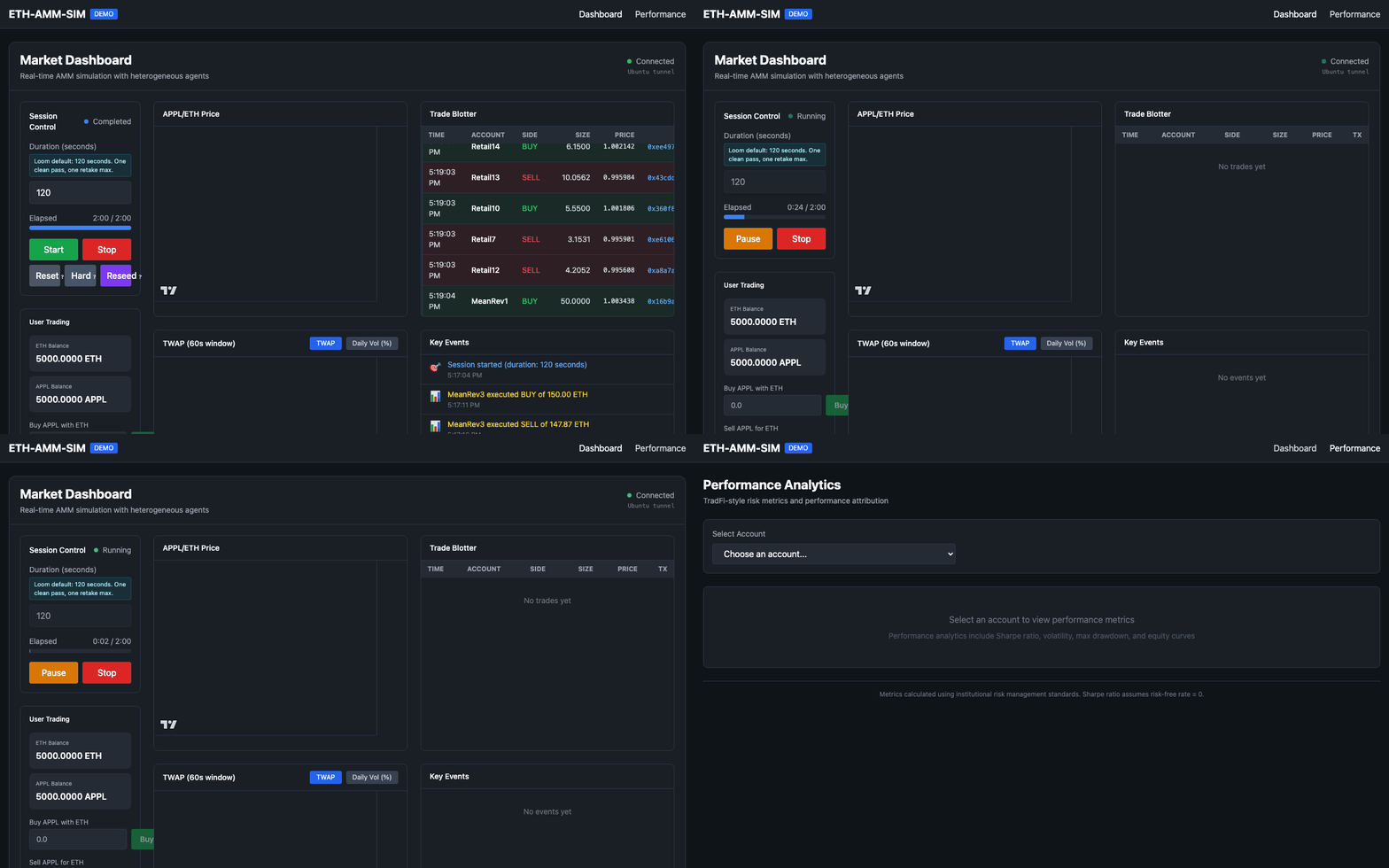
What actually happens to LPs when volatility spikes?

This is a hosted AMM simulator with a Go backend. You can change fees, volatility, and concentrated liquidity, then watch price impact, fee accrual, and impermanent loss the way a desk studies inventory risk.

Technical A Go simulation backend and TypeScript frontend model impermanent loss, fee accrual, concentrated liquidity, and EVM fixed-point arithmetic across volatility scenarios. The live app runs at eth-amm-sim.vercel.app.

AMM Simulation Engine demo
InfrastructureL2Fraud ProofsGoHosted

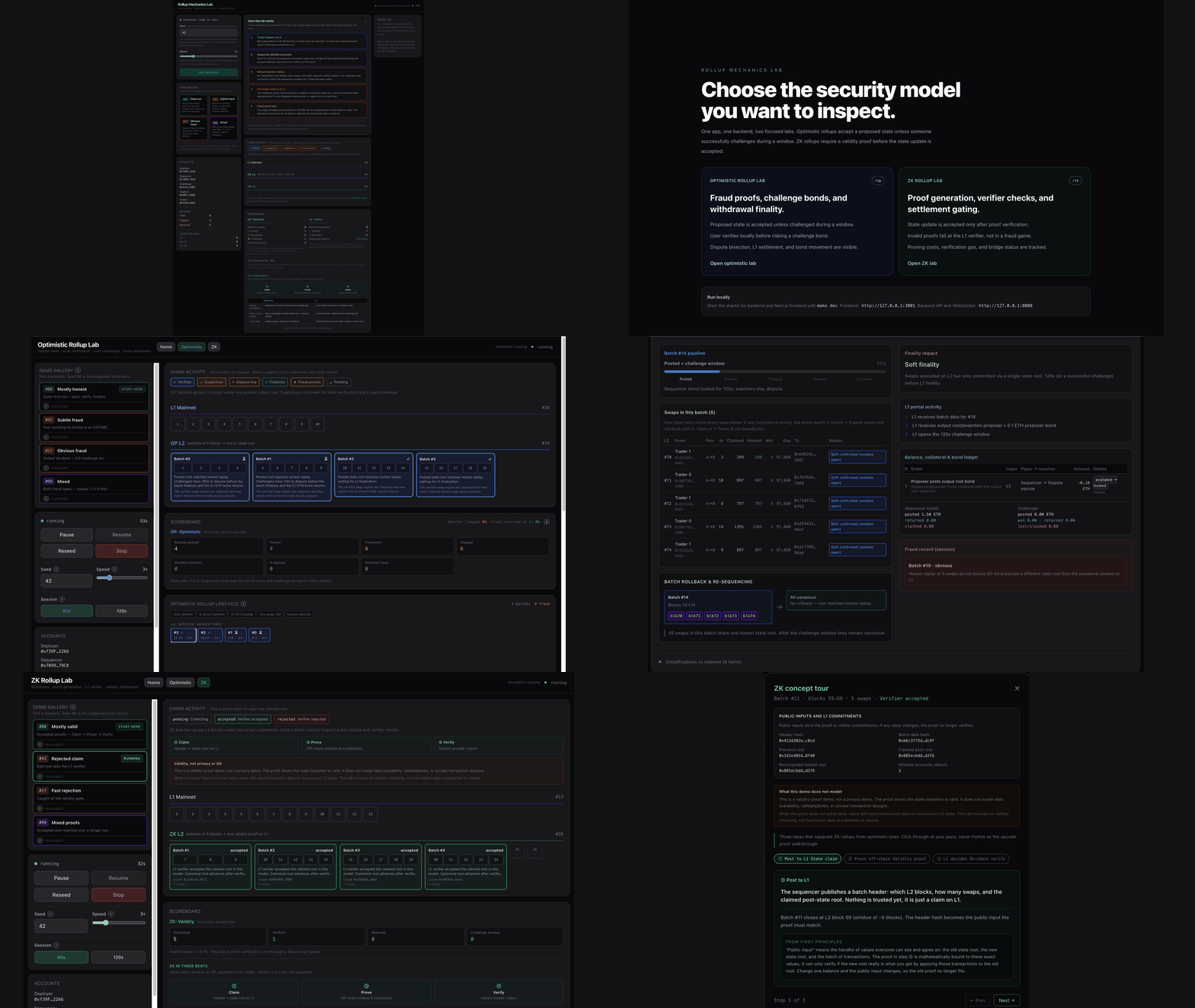
How does an optimistic rollup catch a lying sequencer?

This is a hosted lab with a Go backend and local Anvil chains. You watch an optimistic dispute next to a mock validity path, including bonds, challenge windows, and what the ZK lane does not prove.

Technical A Next.js frontend and Go service coordinate loopback-only Anvil chains, optimistic batch bonds, Merkle-bisection disputes, and a mock validity lane that re-executes a batch witness. Hosted at eth-l2.vercel.app. The ZK path is illustrative and does not generate succinct proofs.

Rollup Mechanics Lab demo
InfrastructureMEVGoNext.jsHosted

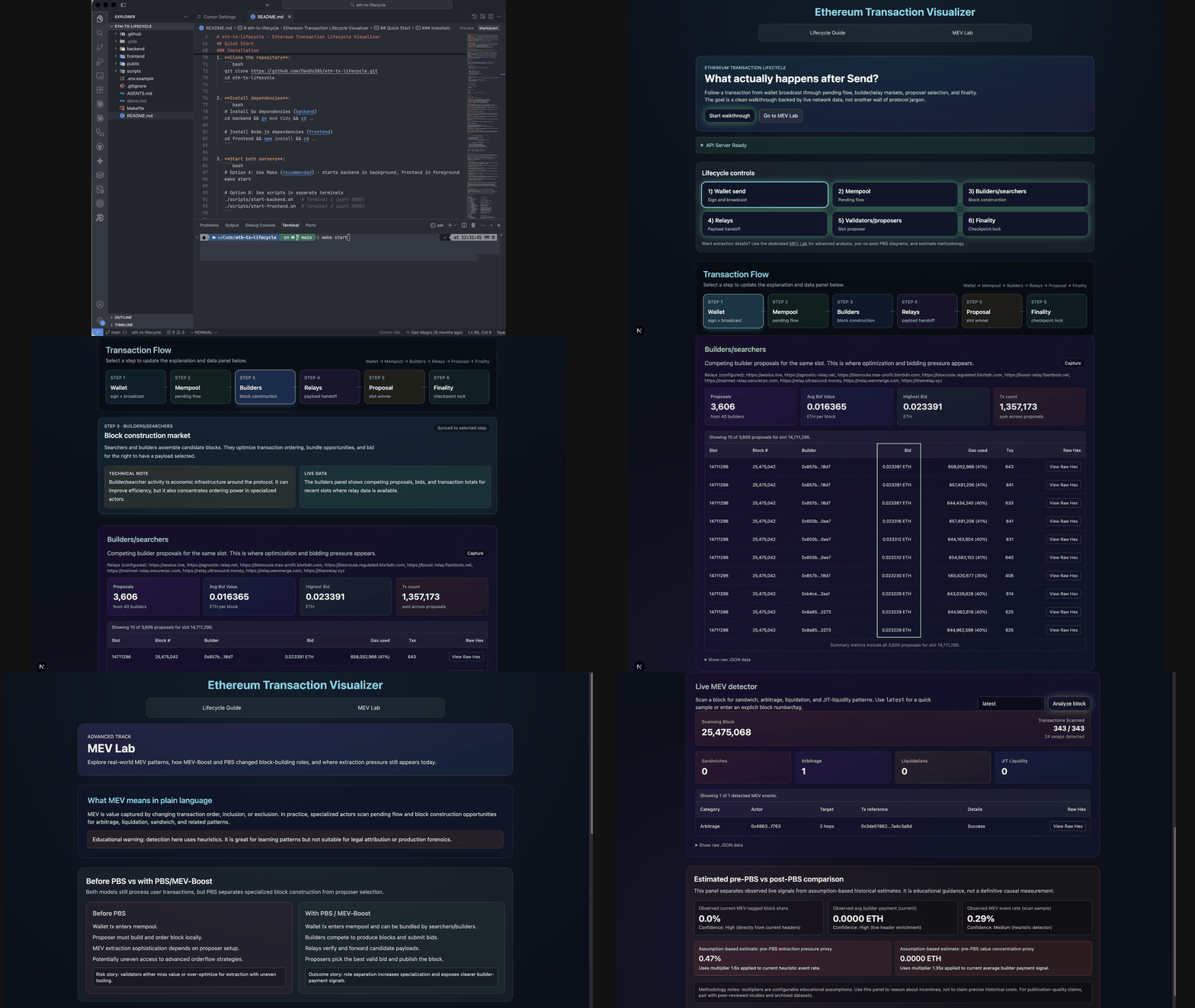
What happens between clicking send and a transaction becoming irreversible?

This is a hosted visualizer backed by live Ethereum data. It follows a transaction through mempool, builders, relays, validators, and finality, then adds a heuristic MEV lab for sandwiches and related patterns.

Technical A Next.js frontend and Go backend combine execution JSON-RPC, Beacon API, and MEV relay data with TTL caching, health checks, transaction decoding, and heuristic sandwich, arbitrage, liquidation, and JIT-liquidity detection. Hosted at eth-tx-lifecycle.vercel.app.

Ethereum Transaction Lifecycle Visualizer demo
Interactive AI Projects

In-browser agent runtime, observability, and Agent Mode surfaces. Research and documentation tooling, not a trading bot.

AIAgentsNext.jsllms.txt

How should an AI read this site without scraping the chrome?

Structured surfaces so language models can load projects, writing, and research as data. A human page, a JSON manifest, and an LLM router: citation-aware context, not a chatbot.

Technical Next.js serves /agent for the human contract, /agent.json for structured manifest data, and /llms.txt for compact routing; the content loaders keep published projects, writing, research, and media aligned.

{
  "schema": "https://magro.dev/agent.json",
  "schemaVersion": "0.1",
  "site": {
    "name": "Daniel Magro | Digital-Asset Trading and Systems",
    "url": "https://magro.dev",
    "description": "Thirteen years in institutional rates trading, execution, and portfolio management. Now trading digital assets and building software systems, market tools, and AI-assisted workflows for crypto, DeFi, and market structure.",
    "owner": {
      "name": "Daniel Magro",
      "email": "dan@magro.dev",
      "role": "Institutional trader building software systems for digital-asset markets",
      "trajectory": "Institutional trader → technical builder → digital-asset trader"
    }
  },
  "agentMode": {
    "endpoints": {
      "overview": "https://magro.dev/agent/",
      "manifest": "https://magro.dev/agent.json",
      "router": "https://magro.dev/llms.txt"
    },
    "principles": [
      "Canonical human context lives on magro.dev.",
      "Agent-facing context should be structured, stable, citation-aware, and low-noise.",
      "GitHub/code links are attached only when they make the argument stronger.",
      "Thesis: Institutional trader → technical builder → digital-asset trader.",
      "Never invent trading returns, Sharpe ratios, live strategy performance, or professional crypto trading employment that is not documented.",
      "Agents are a research/orchestration layer; deterministic systems retain risk and execution control."
    ]
  },
  "projects": [
    {
      "title": "AMM Simulation Engine",
      "slug": "eth-amm-sim",
      "tier": "primary",
      "cluster": "market-structure",
      "hook": "What actually happens to LPs when volatility spikes?",
      "summary": "This is a hosted AMM simulator with a Go backend. You can change fees, volatility, and concentrated liquidity, then watch price impact, fee accrual, and impermanent loss the way a desk studies inventory risk.",
      "technicalDescription": "A Go simulation backend and TypeScript frontend model impermanent loss, fee accrual, concentrated liquidity, and EVM fixed-point arithmetic across volatility scenarios. The live app runs at eth-amm-sim.vercel.app."
    },
    {
      "title": "Rollup Mechanics Lab",
      "slug": "eth-l2",
      "tier": "primary",
      "cluster": "market-structure",
      "hook": "How does an optimistic rollup catch a lying sequencer?",
      "summary": "This is a hosted lab with a Go backend and local Anvil chains. You watch an optimistic dispute next to a mock validity path, including bonds, challenge windows, and what the ZK lane does not prove.",
      "technicalDescription": "A Next.js frontend and Go service coordinate loopback-only Anvil chains, optimistic batch bonds, Merkle-bisection disputes, and a mock validity lane that re-executes a batch witness. Hosted at eth-l2.vercel.app. The ZK path is illustrative and does not generate succinct proofs."
    },
    {
      "title": "Ethereum Transaction Lifecycle Visualizer",
      "slug": "eth-tx-lifecycle",
      "tier": "primary",
      "cluster": "market-structure",
      "hook": "What happens between clicking send and a transaction becoming irreversible?",
      "summary": "This is a hosted visualizer backed by live Ethereum data. It follows a transaction through mempool, builders, relays, validators, and finality, then adds a heuristic MEV lab for sandwiches and related patterns.",
      "technicalDescription": "A Next.js frontend and Go backend combine execution JSON-RPC, Beacon API, and MEV relay data with TTL caching, health checks, transaction decoding, and heuristic sandwich, arbitrage, liquidation, and JIT-liquidity detection. Hosted at eth-tx-lifecycle.vercel.app."
    },
    {
      "title": "Portfolio Agent Mode",
      "slug": "portfolio-agent-mode",
      "tier": "primary",
      "cluster": "interactive-ai",
      "hook": "How should an AI read this site without scraping the chrome?",
      "summary": "Structured surfaces so language models can load projects, writing, and research as data. A human page, a JSON manifest, and an LLM router: citation-aware context, not a chatbot.",
      "technicalDescription": "Next.js serves /agent for the human contract, /agent.json for structured manifest data, and /llms.txt for compact routing; the content loaders keep published projects, writing, research, and media aligned."
    },
    {
      "title": "Hermes X-Ray",
      "slug": "hermes-xray",
      "tier": "primary",
      "cluster": "interactive-ai",
      "hook": "What does a tool-using agent actually see on each loop?",
      "summary": "This is an observability walkthrough of a Hermes-style agent: model-visible context, tool calls, verification gates, and persistence. It is a teaching lab for agent-assisted research, not a live model and not a trading bot.",
      "technicalDescription": "A standalone HTML, CSS, and JavaScript lab with no backend. It exposes model-visible context, loop stages, tool events, token estimates, verification gates, and persistence boundaries for a Hermes-style agent."
    },
    {
      "title": "Agent Runtime: Hermes versus OpenClaw",
      "slug": "agent-runtime",
      "tier": "primary",
      "cluster": "interactive-ai",
      "hook": "Did you ever wonder how Hermes and OpenClaw differ?",
      "summary": "This is a static, side-by-side walkthrough of two open-source agent runtimes. It maps the same loop (input, memory, tool dispatch, saved state) onto real files in both codebases. Nothing executes: you are reading a comparison, not running an agent.",
      "technicalDescription": "Static HTML, CSS, and JavaScript with no backend. The page compares Hermes Agent and OpenClaw across platform input, session hydration, agent loop, tool dispatch, and persistence. Source anchors and an agent-readable map record the comparison."
    },
    {
      "title": "AI Infrastructure Financing",
      "slug": "ai-physical-infra-debt",
      "tier": "primary",
      "cluster": "walkthroughs",
      "hook": "If AI data-center loans go bad, who holds the bag?",
      "summary": "This is an interactive credit memo on GPU-backed loans and data-center securitization. You inspect recovery assumptions and provenance-tagged figures. It is research you can click through, not a live underwriting system.",
      "technicalDescription": "Interactive credit work on GPU-backed term loans and data-center securitization; provenance-tagged figures, recovery scenarios, and Agent Mode exports support inspection of the underwriting chain."
    },
    {
      "title": "Perpetual Funding & Basis Benchmark",
      "slug": "funding-rate-basis-benchmark",
      "tier": "primary",
      "cluster": "trading-research",
      "hook": "Is apparent funding carry still there after fees and slippage?",
      "summary": "Work in progress on perpetual funding, futures basis, cross-venue dislocations, and whether carry survives execution costs. No backtests or performance figures published yet.",
      "technicalDescription": "Rates-desk framing for crypto funding and basis: normalize venue prints, state assumptions, and test whether apparent carry survives fees, slippage, collateral, and execution constraints. Planned stack: Python notebooks, cross-venue data, methodology page. Repo and demo not published yet."
    },
    {
      "title": "Treasury Policy Engine",
      "slug": "treasury-policy-engine",
      "tier": "primary",
      "cluster": "infra",
      "summary": "Narrative hub linking ephemeral signing, air-gapped confirmation, and quorum treasury flows. Framing for how policy and controls sit under digital-asset movement, not a finished production custody product.",
      "technicalDescription": "Narrative hub linking the 1Password ephemeral EVM signer, air-gap Pico signer, and Solana treasury vault into a single treasury-policy walkthrough: whitelist, limits, dual approval, cooldown, and offline or ephemeral signed transactions."
    },
    {
      "title": "1Password Ephemeral EVM Signer",
      "slug": "op-ephemeral-evm-signer",
      "tier": "primary",
      "cluster": "infra",
      "summary": "Shows every transaction field before a test key signs an Ethereum payload, then stops without broadcasting. Demonstrates policy-shaped signing controls relevant to how digital assets actually move.",
      "technicalDescription": "Python, 1Password CLI, and eth-account build a Sepolia EIP-1559 payload through an stdin-only secret pipe; validation precedes key access and the tool records the remaining transient RAM exposure."
    },
    {
      "title": "Air-Gap TX Signer",
      "slug": "airgap-tx-signer",
      "tier": "primary",
      "cluster": "infra",
      "summary": "Keeps an Ethereum test key on a small offline signer. The computer prepares a transaction; the device confirms and returns a signature without joining a network.",
      "technicalDescription": "The host builds unsigned Sepolia transactions and signing digests; the RP2040 path uses C implementations of Keccak-256 and recoverable secp256k1 over USB serial. Desktop known-answer tests pass; Phase 2 firmware (USB serial PING/PONG, LED heartbeat) builds and waits for physical validation on a LAFVIN Pico starter kit."
    },
    {
      "title": "Solana Treasury Vault",
      "slug": "solana-treasury-vault",
      "tier": "primary",
      "cluster": "infra",
      "summary": "Two-person approval flow for a small Solana treasury, with a waiting period for review. Treasury controls as infrastructure literacy for digital-asset operations.",
      "technicalDescription": "Anchor manages a treasury PDA and proposal PDAs with separate owner and approver roles, recipient and amount binding, one-time approval, and slot-based cooldowns. Local lifecycle tests and a plan-and-confirm CLI pass; Devnet still needs the latest program upgrade."
    },
    {
      "title": "Solidity Copilot",
      "slug": "solidity-copilot",
      "tier": "primary",
      "cluster": "labs",
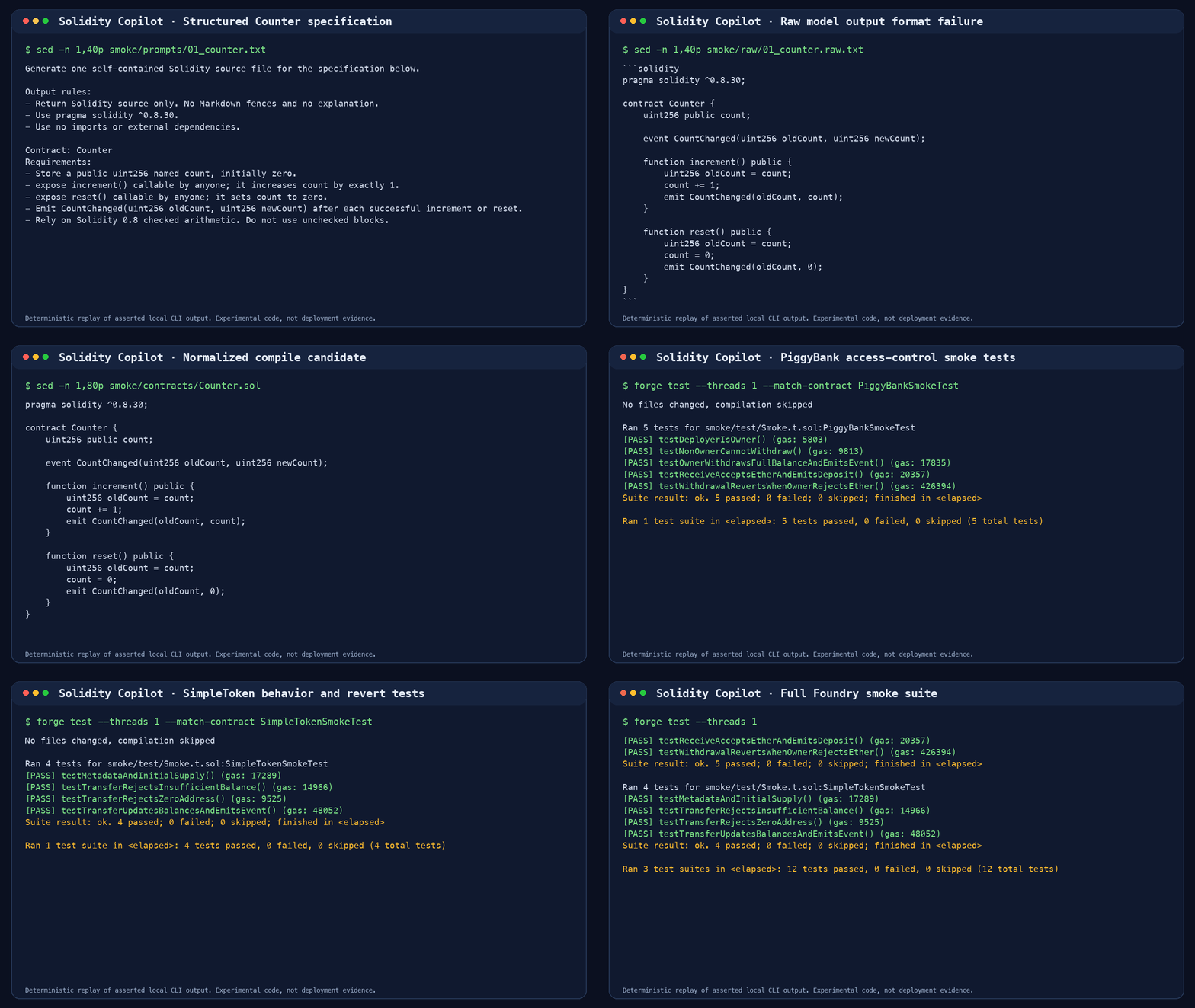
      "summary": "Small contract tasks show whether an AI can write Solidity that behaves as promised. The project checks the output independently and treats a compile as one small signal.",
      "technicalDescription": "An isolated evaluator runs pinned Foundry compilation, hidden behavioral tests, interface and invariant checks, and security triage against constrained contract tasks. B0 through B2 prompt and retrieval baselines precede any bounded LoRA or QLoRA experiment."
    },
    {
      "title": "Ethereum RPC Monitor",
      "slug": "eth-rpc-monitor",
      "tier": "primary",
      "cluster": "labs",
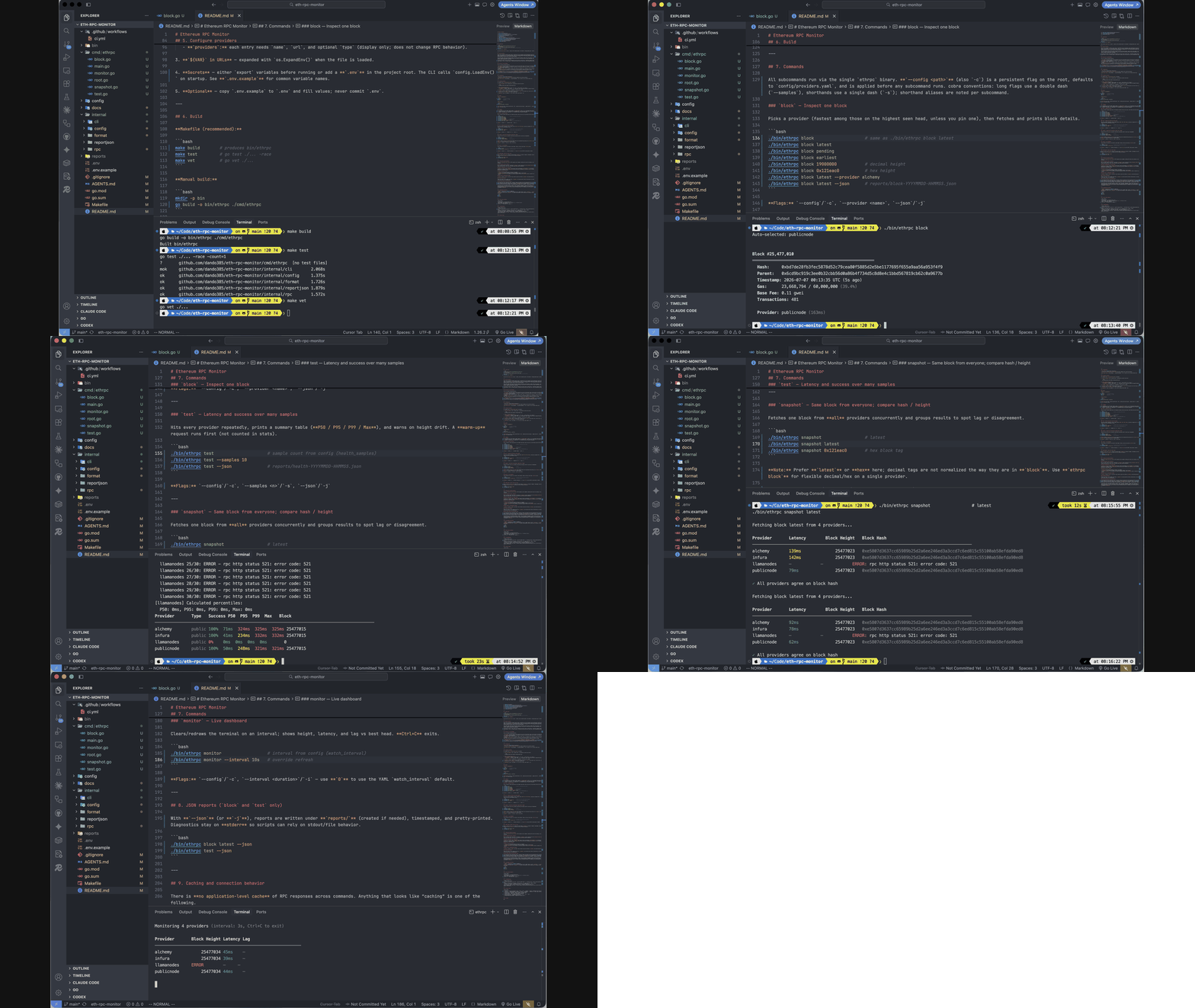
      "summary": "A command-line monitor for what an Ethereum node is reporting: blocks, pending transactions, and live activity. CLI only: there is no hosted UI.",
      "technicalDescription": "Go and Cobra wrap Ethereum JSON-RPC calls for block inspection, mempool snapshots, and transaction tracing; the tool stays focused on read-only node observability."
    }
  ],
  "writing": [
    {
      "title": "The Subprime AI Data Center Narrative: A Trader's View, Part II",
      "slug": "subprime-ai-data-center-narrative"
    },
    {
      "title": "Is the AI Infrastructure Buildout a Bubble? A Fixed-Income Trader's Read, Part I",
      "slug": "ai-infrastructure-buildout-bubble"
    },
    {
      "title": "The Magic Box, Part I",
      "slug": "the-magic-box"
    },
    {
      "title": "Agent Mode and the Inference Tax",
      "slug": "agent-mode-and-the-inference-tax"
    }
  ],
  "research": [
    {
      "title": "AI Infrastructure Financing: State of the Market",
      "slug": "ai-infrastructure-financing"
    },
    {
      "title": "The 2050 Economy: A Structural Forecast",
      "slug": "the-2050-economy"
    },
    {
      "title": "The Octopus as an Architectural Model for AI, Agents, and Agentic Systems",
      "slug": "octopus-agentic-systems"
    }
  ]
}
AIAgentsObservabilityWalkthrough

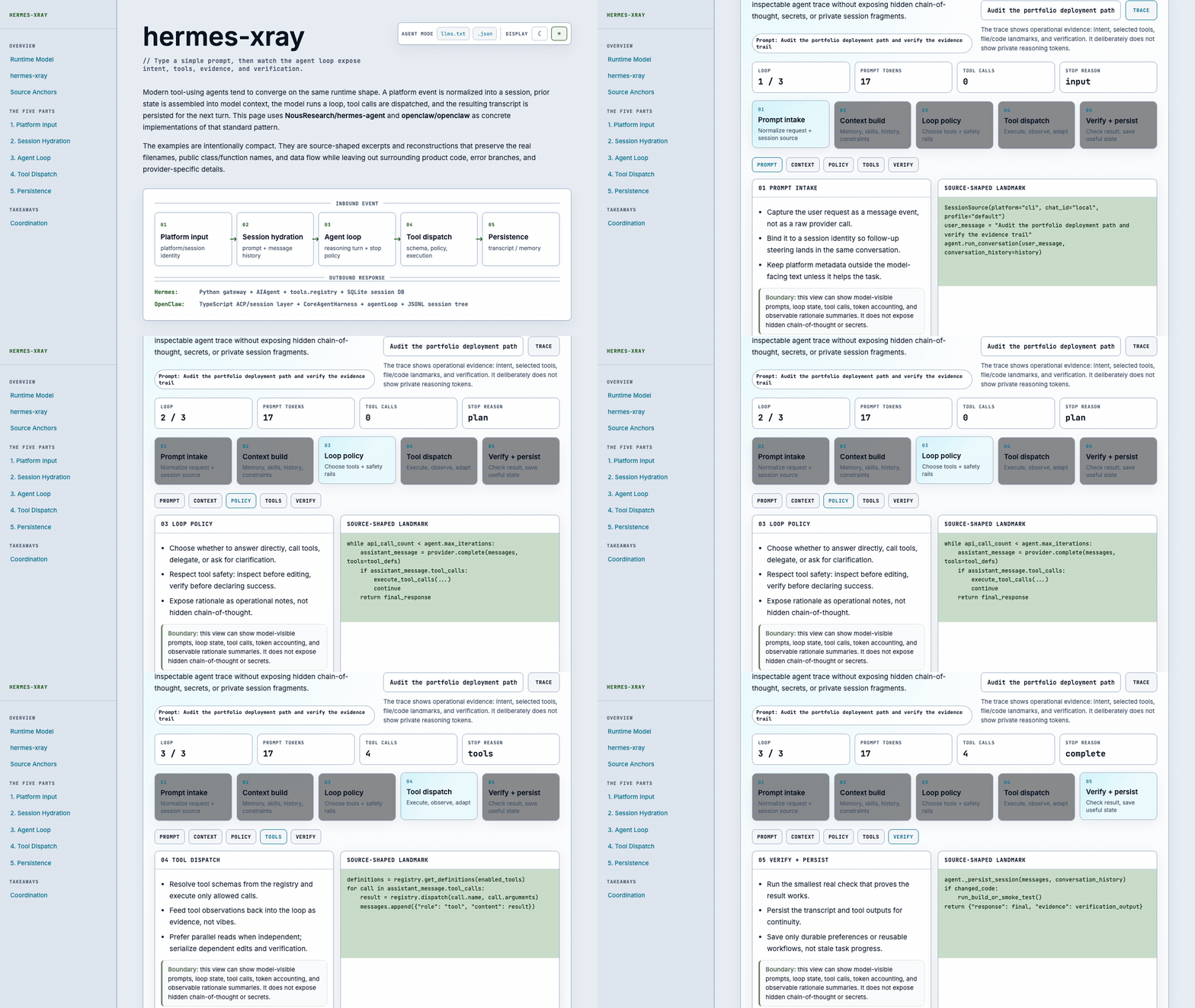
What does a tool-using agent actually see on each loop?

This is an observability walkthrough of a Hermes-style agent: model-visible context, tool calls, verification gates, and persistence. It is a teaching lab for agent-assisted research, not a live model and not a trading bot.

Technical A standalone HTML, CSS, and JavaScript lab with no backend. It exposes model-visible context, loop stages, tool events, token estimates, verification gates, and persistence boundaries for a Hermes-style agent.

Hermes X-Ray demo
AIAgentsLLM SystemsWalkthrough

Did you ever wonder how Hermes and OpenClaw differ?

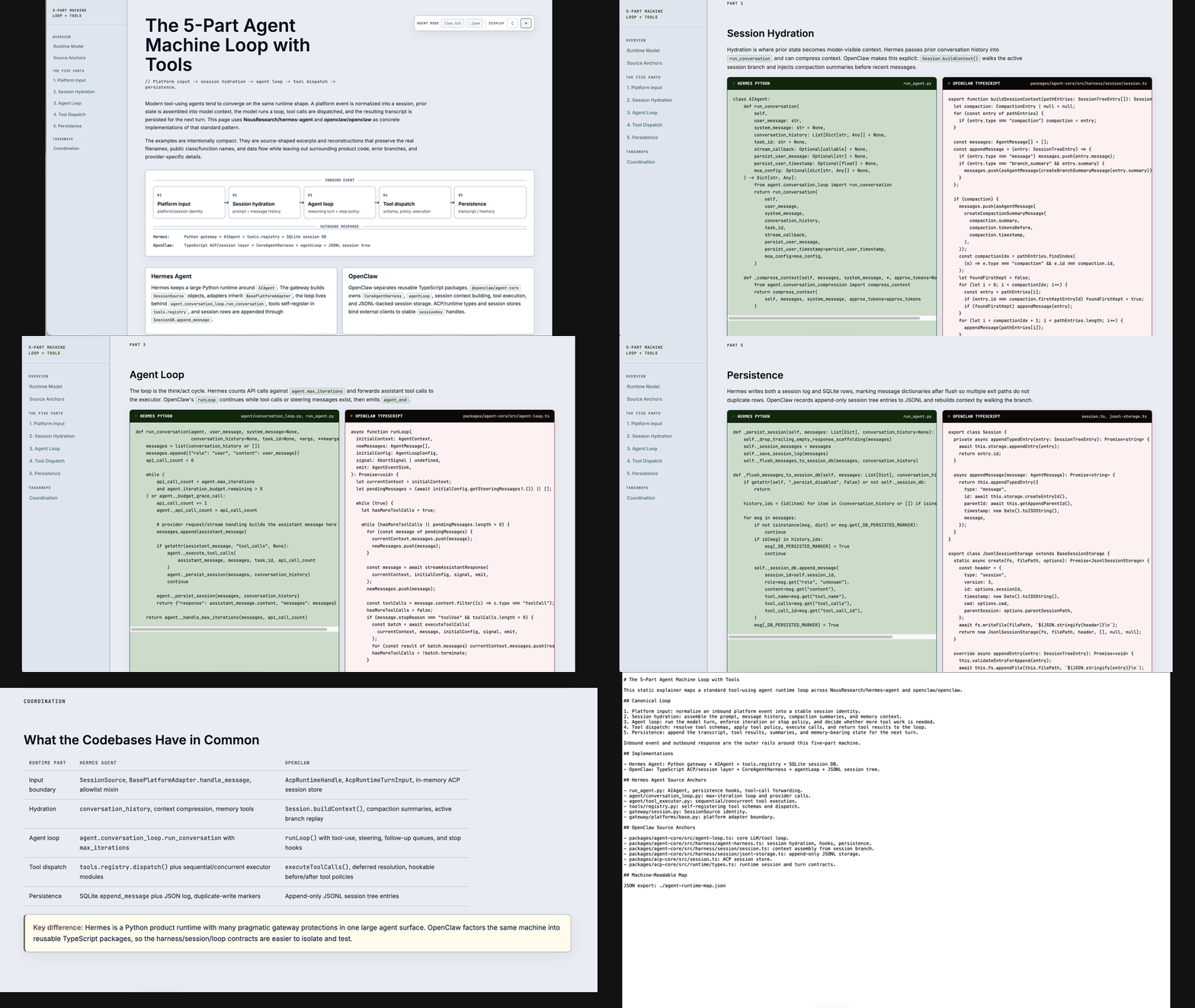
This is a static, side-by-side walkthrough of two open-source agent runtimes. It maps the same loop (input, memory, tool dispatch, saved state) onto real files in both codebases. Nothing executes: you are reading a comparison, not running an agent.

Technical Static HTML, CSS, and JavaScript with no backend. The page compares Hermes Agent and OpenClaw across platform input, session hydration, agent loop, tool dispatch, and persistence. Source anchors and an agent-readable map record the comparison.

Agent Runtime: Hermes versus OpenClaw demo
Interactive Walkthroughs

Guided labs that unpack a market mechanism. Teaching tools, not hosted chains.

AICreditInfrastructureWalkthrough

If AI data-center loans go bad, who holds the bag?

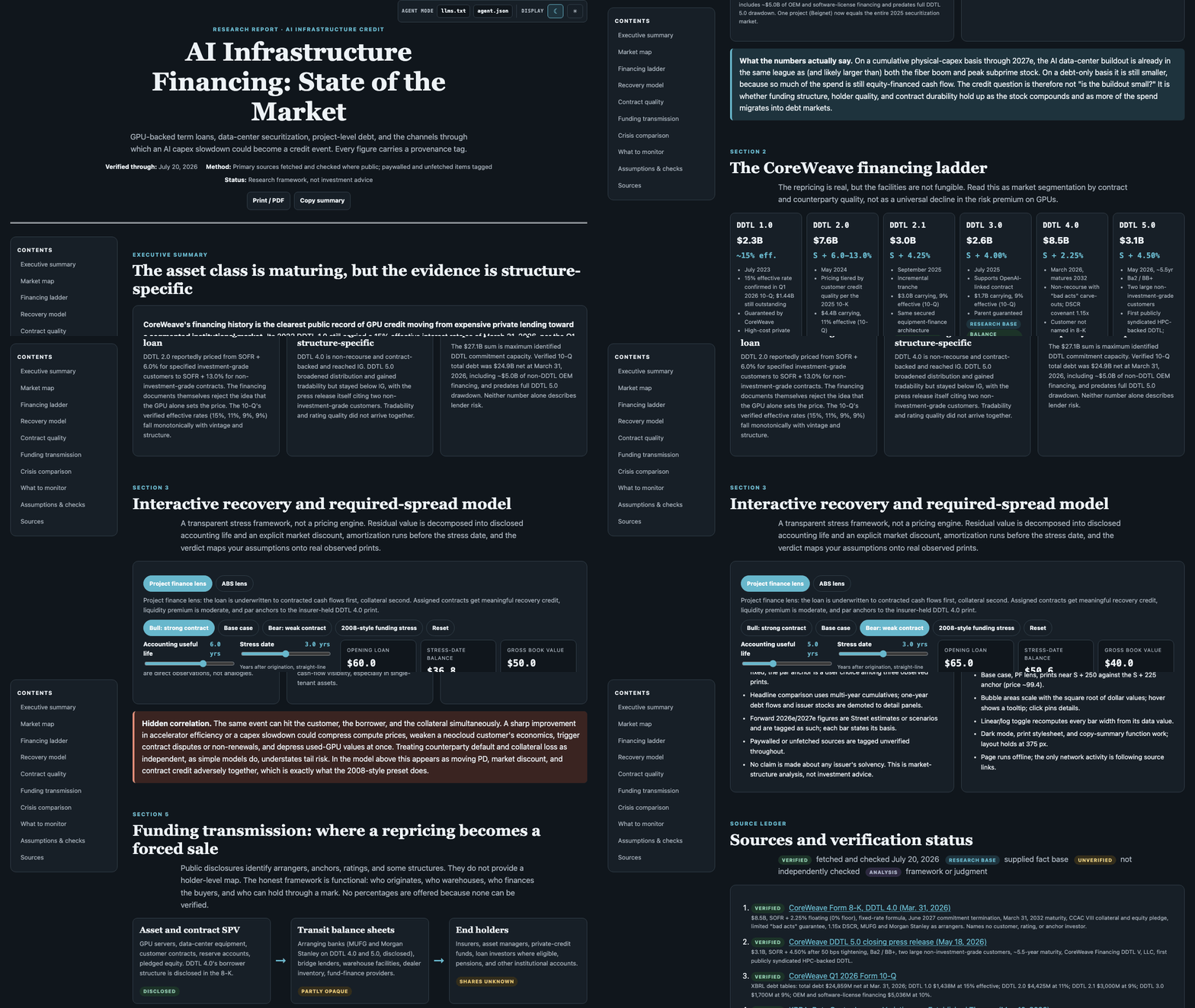
This is an interactive credit memo on GPU-backed loans and data-center securitization. You inspect recovery assumptions and provenance-tagged figures. It is research you can click through, not a live underwriting system.

Technical Interactive credit work on GPU-backed term loans and data-center securitization; provenance-tagged figures, recovery scenarios, and Agent Mode exports support inspection of the underwriting chain.

AI Infrastructure Financing demo
In Progress

Active builds and research. Status labels stay honest; nothing here is finished work presented as complete.

RatesFundingBasisCryptoMarket Structure

Is apparent funding carry still there after fees and slippage?

Work in progress on perpetual funding, futures basis, cross-venue dislocations, and whether carry survives execution costs. No backtests or performance figures published yet.

Technical Rates-desk framing for crypto funding and basis: normalize venue prints, state assumptions, and test whether apparent carry survives fees, slippage, collateral, and execution constraints. Planned stack: Python notebooks, cross-venue data, methodology page. Repo and demo not published yet.

CustodyPolicyQuorumTreasurySecurity

Narrative hub linking ephemeral signing, air-gapped confirmation, and quorum treasury flows. Framing for how policy and controls sit under digital-asset movement, not a finished production custody product.

Technical Narrative hub linking the 1Password ephemeral EVM signer, air-gap Pico signer, and Solana treasury vault into a single treasury-policy walkthrough: whitelist, limits, dual approval, cooldown, and offline or ephemeral signed transactions.

EthereumSecurity1PasswordSepoliaCLI

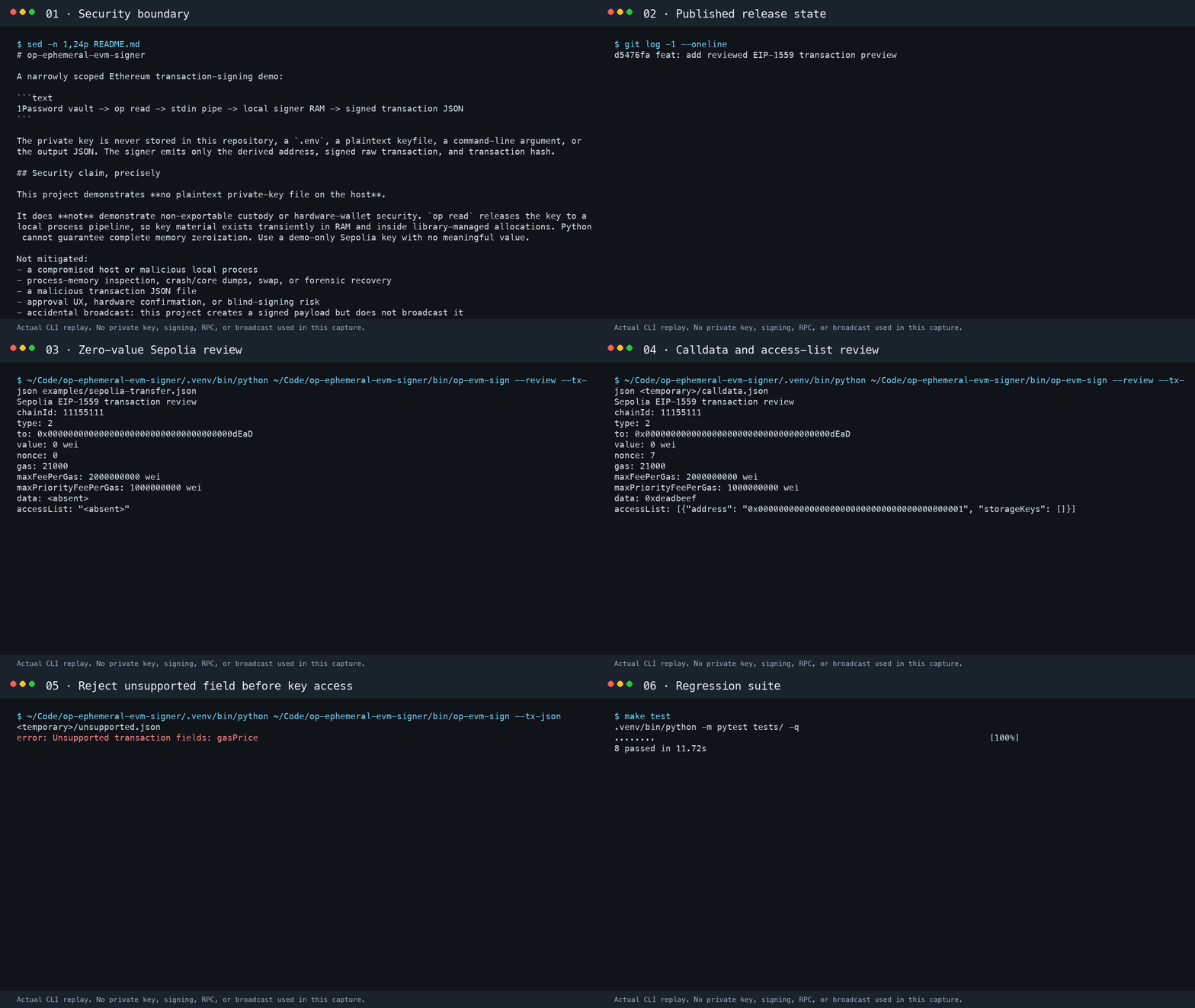
Shows every transaction field before a test key signs an Ethereum payload, then stops without broadcasting. Demonstrates policy-shaped signing controls relevant to how digital assets actually move.

Technical Python, 1Password CLI, and eth-account build a Sepolia EIP-1559 payload through an stdin-only secret pipe; validation precedes key access and the tool records the remaining transient RAM exposure.

1Password Ephemeral EVM Signer demo

Air-Gap TX Signer

Hardware arriving
EthereumHardwareSecurityCEmbedded

Keeps an Ethereum test key on a small offline signer. The computer prepares a transaction; the device confirms and returns a signature without joining a network.

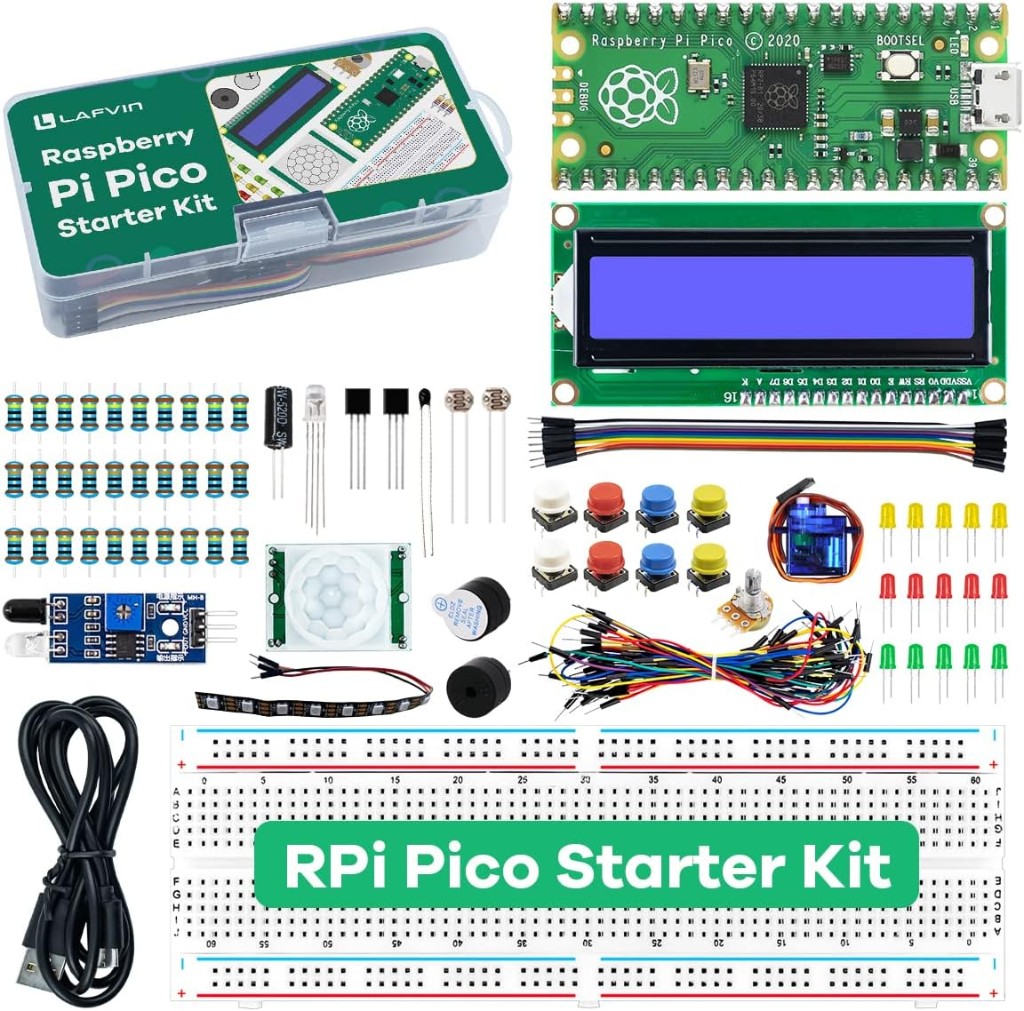
Technical The host builds unsigned Sepolia transactions and signing digests; the RP2040 path uses C implementations of Keccak-256 and recoverable secp256k1 over USB serial. Desktop known-answer tests pass; Phase 2 firmware (USB serial PING/PONG, LED heartbeat) builds and waits for physical validation on a LAFVIN Pico starter kit.

Solana Treasury Vault

Devnet upgrade pending
SolanaAnchorTreasury ControlsRustCLI

Two-person approval flow for a small Solana treasury, with a waiting period for review. Treasury controls as infrastructure literacy for digital-asset operations.

Technical Anchor manages a treasury PDA and proposal PDAs with separate owner and approver roles, recipient and amount binding, one-time approval, and slot-based cooldowns. Local lifecycle tests and a plan-and-confirm CLI pass; Devnet still needs the latest program upgrade.

Solidity Copilot

In progress
AISolidityEVMSecurityEvaluation

Small contract tasks show whether an AI can write Solidity that behaves as promised. The project checks the output independently and treats a compile as one small signal.

Technical An isolated evaluator runs pinned Foundry compilation, hidden behavioral tests, interface and invariant checks, and security triage against constrained contract tasks. B0 through B2 prompt and retrieval baselines precede any bounded LoRA or QLoRA experiment.

Solidity Copilot demo
InfrastructureGoJSON-RPCCLI

A command-line monitor for what an Ethereum node is reporting: blocks, pending transactions, and live activity. CLI only: there is no hosted UI.

Technical Go and Cobra wrap Ethereum JSON-RPC calls for block inspection, mempool snapshots, and transaction tracing; the tool stays focused on read-only node observability.

Ethereum RPC Monitor demo

Institutional markets

13 years in institutional rates sales, trading execution, and portfolio management. Liquidity, risk, collateral, and market structure ran through the work at Merrill Lynch, Jefferies, Nomura, PointState Capital, and Prudential (PGIM).

Full institutional history
2017 – 2019
VP, Fixed Income Portfolio Manager
Prudential Financial (PGIM)
Managed global interest-rate and relative-value portfolios across U.S., Canadian, European, and Japanese markets.
2015 – 2017
VP, Asian Hours Macro Execution Desk
PointState Capital
Executed cross-asset trades and managed risk from Wellington through Sydney, Tokyo, Hong Kong, and Singapore.
2011 – 2015
VP, Proprietary Trading
Nomura Securities
Traded macro and micro strategies in interest rates, FX, equities, and derivatives across U.S., European, and Japanese markets.
2006 – 2011
Institutional Fixed Income Sales
Merrill Lynch · Jefferies
Covered institutional clients across interest-rate products.

Technical building

Since May 2019: independent e-commerce operations built on Python automation, then full-stack, AI, and Web3 systems work including Hermes tooling, EVM marketplace contracts at RAMM.ai, and open-source agent infrastructure. Freelance product work continues. I still trade crypto, follow protocols, and build tools around both.

Crypto trading and DeFiMarket structure and execution toolingAgent orchestration and observabilityBlockchain infrastructure and signing controlsFull-stack product systems
Builder timeline
Aug 2025 – Present
Independent Trading & Engineering
Independent
Independent trading and systems work across crypto market structure, DeFi, agent tooling, and full-stack product work. Client e-commerce and product launches continue alongside open-source tooling, with focus on liquidity, AMMs, execution, funding/basis, and agent-assisted trading workflows.
Mar 2024 – Jul 2025
Product and Web3 Platform Contributor
RAMM.ai
Developed EVM marketplace contracts, the product frontend, and the public website for an early-stage Web3 startup; translated on-chain mechanics into product requirements and presented the platform to retailers, partners, and users.
May 2019 – Jul 2022
Independent E-Commerce Operator
Self-Employed
Designed Python-based monitoring and execution workflows across retail platforms; analyzed secondary-market liquidity, pricing, and operational risk. Scaled a part-time operation into a full-time business with three consecutive years of six-figure profitability through automated execution in a constrained opportunity set.
At a Glance
Institutional experience13 years
Technical experience5 years
Building withPython · TypeScript · Go · Solidity · Ethereum · Solana · trading systems · agent systems · Hermes
FocusDigital-asset trading, market structure, execution, DeFi, systems
EducationPenn State, Magna Cum Laude
Technical studyCS50 · boot.dev · Cyfrin · deeplearning.ai · MIT OpenCourseWare